Showing posts with label lecture. Show all posts

Saturday, February 21, 2015

The Fight for Ukraine

Earlier this month, the World Affairs Council of West Michigan hosted Dr. Matthew Rojansky, of the Woodrow Wilson International Center for Scholars and an expert on U.S. relations with the states of the former Soviet Union, especially Russia, Ukraine, Belarus and Moldova, to speak on the crisis still brewing in Ukraine and what that means for the rest of Europe, the US, and the world. A spark was lit in Ukraine after an over-the-top reaction by the government to the mostly peaceful protests that broke out in Kiev in late 2013, but trouble had been percolating for years, as Ukraine lies torn between an inviting European Union to its west and a corrupt, complex post-Soviet legacy to its east.
(For an example of the excesses of the regime of former president Viktor Yanukovych, just look at his palace.)
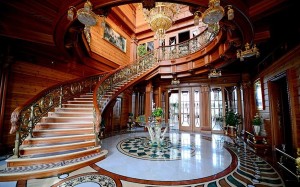
yanu-staircase_2834871kyanu-steinway_2834866k
The crisis began the evening of November 21st, 2013, in what is now known as the Euromaidan, which means, literally, "Euro Square".  The mass demonstrations demanded closer European integration, and eventually, after the brutal reaction to the unrest by police and Yanukovych’s regime, the resignation of the president and the election of a new government. The protest became politicized and radicalized by the gross mistreatment of the protestors, which included snipers high above Kiev firing down upon unsuspecting protestors, and a so-called “anti-Bill of Rights” pushed through by Yanukovych combined with a full-fledged “Battle for the Maidan” in mid-February 2014 solidified the revolution.
At this point, Putin and Russia began to lick their chops at the prospect of regaining territory in the already heavily pro-Russian regions of southeast Ukraine, including the Crimean peninsula. His thinly disguised support for pro-Russian rebels (who ‘aren’t Russian but only happen to wear Russian uniforms…maybe there was a very large wholesale discount at a local supply store), coupled with the shooting down of Malaysia Air flight MH17 brought international attention to a crisis that had been boiling over for months.
Why didn’t the Malaysia Air flight avoid flying over the war-torn region? Well, Ukraine is big. Really big. Which makes the geopolitics of this conflict inescapable.
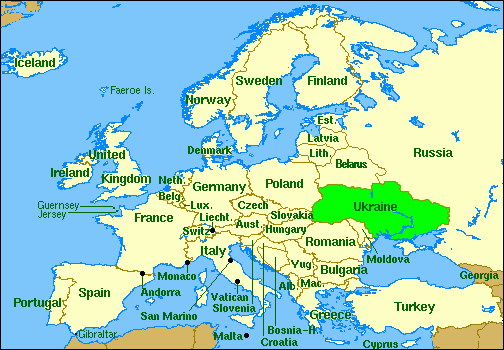
ukraine
So what is Putin’s endgame?
Domestic politics. He's worried that this could potentially happen in Russia? The situation is similar: a corrupt ruler, not a great economy, a poor record on human rights. It’s in his best interest to ensure that the Ukrainian people are worse off when all is said and done. He wants to broadcast a message that revolutions are bad for business.
His credibility. He must win versus the evil West. That’s not too tough of a picture to paint, with all sorts of fascists and far-right Neo-Nazis popping out of the Ukrainian woodwork to support the revolution. After all, Russian nationalism has traditionally been a bestseller. Even with the Russian economy tanking, his approval ratings are in the 80s.
Geopolitics. Is he gunning for a new Soviet Union? Simply, no. But he does want to build a sphere of influence around Russia to combat both the EU and NATO. Seeing Ukraine join one or both of those would be a huge blow. He needs the post-Soviet in his (Russian word for pocket).
Good news for him:
  • The Ukraine military is significantly outmatched by its Russian counterparts
  • The nationalist groups that dominated the new Ukrainian elections give him an easy target to propagandize against
  • He controls his domestic media and much of the Ukrainian media
  • He controls the flow of natural gas as well, in what is a fiercely cold Eastern European winter
Since the talk, there has been news of a cease-fire in Ukraine, an agreement negotiated by the leaders of Germany, France, Ukraine and Russia. The headline of the Wall Street Journal article perhaps says it all: In Ukraine, Cease-Fire Agreement Is Met With Doubt.
Combined with the Washington Post headline, Putin appears the biggest winner of Ukrainian cease-fire talks, it’s a grim picture.
So what is there to do in Ukraine?
  • Well, first, don't send John Kerry. Nothing against him (actually...never mind) this isn't the time for photo ops. This is not a poverty related protest.
  • There needs to be more international observation to prevent false propaganda. Better border security is crucial too.
  • Realistic sanctions are a must. They can send a moral message and can change conduct of a bad actor over time. But don't overstate their effect, and only sanctioning a handful of rich people makes no sense.
How can Ukraine succeed?
  • Must combat corruption. It is currently the most corrupt post-Soviet state. The new government must make near-term changes.
  • The US can open doors to them, and show what they'll be missing by choosing Russia over the West.
  • There are unfortunately no easy answers; this conflict must be taken seriously.
Dr. Rojansky’s final point was a sombering one: “If Ukraine turns into social economic disaster it will be a European disaster.”

Sunday, November 9, 2014

Francis Fukuyama on Political Order and Political Decay

This past week, Francis Fukuyama came to The Hauenstein Center at GVSU to give a lecture on his new book, Political Order and Political Decay. To sum it up in a sentence: it’s been a pretty bad year for order in global politics.
I did not take this photo.

(The director of The Hauenstein Center in his introduction described Fukuyama as one of the top five political thinkers in the world. Who knew they had rankings on that? Is that the AP or the Coaches Poll? Will Fukuyama make the College Football Playoff? So many questions…)

Fukuyama rose to fame after the publication of his book The End of History and the Last Man, in which he argued that liberal democracy stood alone as the only form of government compatible with socio-economic modernity (opposed to say communism, as Marx had posited).

The New York Times, in a review of Political Order and Political Decay, wrote:
Over the years since, Fukuyama has continued to argue the case, and has now summed up his efforts with a two-­volume magnum opus that chronicles global political development from prehistory to the present. A quarter-century on, he remains convinced that no other political system is viable in the long run, but concludes his survey with a sobering twist: Liberal democracy’s future is cloudy, but that is because of its own internal problems, not competition from any external opponent.
Large, traditional powers like China and Russia are banging their drums and looking to expand their territories, while small, nontraditional groups continue to make noise across the Middle East and Africa. The hope we should have, according to Fukuyama, is for all of these states to get to Denmark. Not on the map per se, but to get to Denmark’s level of stability and low corruption. If Haiti, Somalia, Iraq, et al., looked like Denmark, the world would be better off. The problem is, we don't know how Denmark got to be Denmark. How did Vikings turn into social democrats? Maybe we'll never know.

Fukuyama argues that political order is held up by three pillars:
• The state, which is granted certain powers and responsibilities;
• The rule of law, which is a constraint on the powers of the state;
• Democratic accountability, although it’s important to remember that procedural accountability doesn't always equal substantive accountability. (Meaning, just because they say they're doing it doesn't mean they're actually doing it. See: voting in Afghanistan.)

These three pillars are necessities in a liberal democracy. Like the legs of a stool, unbalance one of them and order becomes wobbly.

Looking more closely at the state, there exists a difference between a modern state and a patrimonial state. In a modern state, there are clear distinctions between public and private. Corruption is possible, but it can be squashed through both the rule of law and democratic accountability.

In a patrimonial state however, the government itself is a species of private property. The king, ruler, president owns everything. The modern version is called a neopatrimonial state; take, for example, Ukraine. The democratic elections that precipitated the recent protests and rioting returned to power a president who had raided the treasury to build himself a massive palace outside Kiev. Soviet-esque corruption at its finest and most brazen. Other prominent examples of struggling democracies include India, Nigeria and Greece.

In Greece, ever since their transition to democratic rule, parties have won power via a system of patronage, rewarding supporters with civil jobs. And that’s been their downfall; Greece now has seven times per capita the amount of public workers as the UK. It’s not that these countries don’t understand democracy, or are incapable of practicing it, it's just that their democracies are immature. For most, they’ve been at it for less than a century.

It’s important to remember that the US hasn’t always been the beacon-on-a-hill of democracy that we are today. (That was sarcasm.) The system of patronage ravaging countries like Greece and Ukraine takes its lead from early 19th-century American politics, specifically the presidential election between Andrew Jackson and John Quincy Adams. A century of patronage tradition followed that took the assassination of James Garfield and the trust-bustin’ exploits of Teddy Roosevelt to fix. Democracy created problems of corruption, but was also key to eventually solving them.

Which brings us to political decay. Why is there still corruption in America? After all, the three pillars of our ‘stool’ remain intact and balanced. (Right?)

Fukuyama argues that despite America’s problems, we are not in decline as a democratic society. The rise in interest groups, though, is troubling. They are legitimate entities, but there is simply too much money involved, manipulating elected officials and distorting the views of the electorate. K Street lobbyists don't represent voters, just wealthy elites. Add to this mix intense polarization and extreme gerrymandering and you are left with the wide split between the parties that we see today.

The Founding Fathers, when writing the Constitution, wanted to maximize individual liberty, and as a result instituted the genius system of checks and balances that we know and love. Partisan politics, however, have led to this system transforming into what Fukuyama calls a "vetocracy", or a rule by veto. It is so bogged down and obstructed that necessary reforms to government are nearly impossible. (Case in point: the budget. Entitlement reform. Immigration. The tax code. Need I go on?) The US is a crucial model of democracy internationally, and we are simply not acting like a very good role model right now.

An audience member asked him if he still felt liberal democracies were the "end of history", and he said he did. Two-thirds of the countries on Earth have some form of a democracy. He admitted however, that the Chinese system is a threat to his thesis, because they have made a viable state despite running an authoritarian-style government, which may be attractive to developing countries.

Assorted notes:

  • A broad middle class is key to sustaining democracy, making it easy to understand where and why democracy has failed, the most obvious example being much of Latin America. Social inequality often gives rise to populist politics, and the accompanying unrest and instability.
  • Gerrymandering is a problem. Re-districting ought to be done on a non-partisan basis, as they do in California, to fix this mass polarization and huge incumbency advantage.
  • Are instant runoff elections the solution, where candidates are ranked and votes reassigned if the voter's top choice loses? It would make it easier for third-party challengers to get their voices heard.
  • In response to a question regarding Islamic extremism, he argued that ISIS is not a huge threat, but is made more viable by the vacuum of modern states in the area. The instability in the region results from an ongoing Shia versus Sunni civil war, which in itself is shaping up as a proxy war between Saudi Arabia and Iran. It won’t stop until they figure out it makes sense to stop fighting, similar to the battles between denominations of Christianity across the centuries. 
  • “The desire for democracy is strong but actually doing it is hard.”

After the talk, in the receiving line to get my book signed, I asked Dr. Fukuyama about neo-conservatism and if it is actually possible for a benevolent hegemon to even exist. (Fukuyama famously broke with Dubya and his merry band of neocons after the invasion of Iraq in 2003.) He murmured something about breaking with them in '03, which I already knew thanks to a quick pre-lecture scan of his Wikipedia page, and then said something along the lines of "we underestimated the hard military power that was needed." No shit. I was hustled through without another follow-up.

My original question, though, asked if a superpower is ever able to truly act benevolently when aiding, interfering with, or invading another state. True-believer neocons would probably say yes, in that the adoption of democracy is worth any unrest or upheaval caused. The quagmire of Iraq, in my opinion, is proof enough that it is actually not worth it. Reality bites, as they say.

Sunday, June 1, 2014

Sir Richard Branson at the Economics Club

Sir Richard Branson, of Virgin Records, Airlines, Galatic, Mobile, etc. fame, spoke at the Economics Club Annual Dinner last week, and proved there's more to him than a luxurious mane and a flashy lifestyle. In a wide-ranging conversation, he spelled out an inspiring worldview that has enabled him to not only become uber successful, but to share his success and inspire others to join him in making the world a better place. 

He is dyslexic, which if you read Malcolm Gladwell's latest book you'd be convinced is not so much a hindrance as a surmountable obstacle that bestows upon its sufferers useful traits, like an ability to work hard, negotiate and think outside the box. By struggling to read and understand what was going on in school, he didn't achieve the sort of success early on you might have expected from someone of his stature.

He grew up with a very strict mother and a slightly easier father; at age 15, he convinced them to let him drop out of school to start a magazine. This would be the first of over 400 companies he's started during his life. A funny story he told was years after he left school, and had made a little money, the headmaster came calling for a donation, in the hopes of building a new girls dormitory. Not having enjoyed his time at the school very much, Branson said he'd only give if he could name the dorm after his company. (Virgin, for the slow ones.) Needless to say, the headmaster stopped calling. 

The magazine taught him the art of survival and from there he was off. His airline was started almost on a lark - needing to get somewhere quickly (I think he said he had to meet a beautiful woman somewhere outside of driving distance), his only hope was to charter a private plane, which at the time he could barely afford to do. He set up a sign in the airport selling seats on his chartered ride for $29, and sold them all in almost no time. His interest piqued, he called up Boeing to inquire about how to buy a used 747, and Virgin Airlines was born. 

He battled the incumbent British Airways incessantly, leading to this epic stunt:

I was woken up at 5.30am one morning to be told that the BA-sponsored London Eye had a technical problem - they couldn't erect it.They had the world's press waiting to see it going up and I knew we had a duty to give them something to look at. We had an airship company just outside London so we scrambled a blimp and the end result was an airship flying over the wheel bearing the slogan 'BA Can't Get It Up'!!


His business philosophies are refreshing. His entire goal in any business endeavor he starts or joins is to make his customers lives better, and at the end of the day to be proud of his products. He's heavily philanthropic and noted that business leaders can and should do more to tackle the problems of the world. After all, personal freedom comes from economic freedom. He talked a lot about the importance of resolving conflicts before they escalate out of control and into lose-lose situations for all of the parties involved. He was actually part of an envoy set to visit Saddam Hussein to encourage him to acquiesce and cooperate on the verge of the US invasion in 2003. Sadly, that meeting was just a few days late - the bombing started the day before they were set to fly in. 

It's not hard to see why he's so successful. He leads from a position of warmth and openness - he espouses the virtues of praising his employees and celebrating their successes rather than becoming angry at their failures. Clearly, with the wide array of ventures he's got going at any one time, he needs to be a good delegator and surround himself with good people. 

You may have heard about his space travel company, called Virgin Galatic. That might be the last frontier he has yet to conquer - and you can join him too! (for the low, low price of $250,000.)

Sunday, April 20, 2014

Richard Leakey at the World Affairs Council of West Michigan

Richard Leakey, the Kenyan paleoanthropologist, conservationist and politician, gave an engaging, hour-long lecture Wednesday night at Aquinas College. Leakey, who along with his archaeologist parents Louis and Mary Leakey was selected as one of Time Magazine's 100 Most Influential People of the 20th Century, was the guest of the World Affairs Council of West Michigan, and the much anticipated presentation did not disappoint.

Leakey's talk focused on a similar topic as his seminal 1995 book The Sixth Extinction: Patterns of Life and the Future of Humankind: Earth has had five major extinctions in its existence, and is currently in the midst of its sixth thanks in large part to man-made environmental degradation and climate change. He defined an extinction as at least 80% of plant and animal species ceasing to exist; at the rate it is occurring now, a unique species dies out every 20 minutes. Climate and environmental changes are happening faster than their inhabitants can evolve, making it impossible for some to survive.

Regardless of the inherent and controversial politics of the topic, by using a potent mix of scientific fact and emotional appeals to the packed house's common sense and decency, Leakey made a compelling argument. He told the story of a pride of lions that experienced a huge decline in numbers, a die-off that was eventually linked to a pesticide working its way from crops to smaller animals to the lions. It turns out that that particular pesticide had previously been banned in North America and Europe, but with laxer regulations in Africa, the manufacturer was able to sell it there. Only when the infected meat of chickens and ducks started showing up in village markets and killing people did the government eventually act to ban it. But wouldn't you know it, that exact same pesticide is now back in Kenya, only under a different brand name. Mitt Romney would say corporations are people, but in this specific instance, those people don't seem very nice.

Turkana Boy, the most complete early human
skeleton ever found, was discovered by Leakey's
team in 1984. It is 1.5 million years old.
He joked that he is comforted by his own mortality, because he won't have to deal with these huge problems the world face. Another example - he explained how one hundred years ago, the amount of carbon dioxide in the atmosphere hovered around 250-280 parts per million; now, in 2014, that number is around 400 parts per million. At 450 parts per million, the wheat crops growing in our fields, the basis of most diets around the world, will begin to suffer a precipitous decline in its nutrition and caloric value. So we've got that going for us...which is nice.

He was quick to add that it's not too late to reverse this trend, but that it will require a combination of strong leadership at the top of government and a democratic, grass roots-led movement to demand tougher, smarter decisions from our elected officials. So far, we have neither. And with the third-world undergoing their own industrial revolutions, on an even quicker scale, these emissions stand to increase even more without some sort of drastic action. 

An audience member asked him during the Q&A if the great asteroid that struck down in the Yucatan 65 million years ago, wiping out the dinosaurs with its resulting changes in climate and environment, was an analog for the situation we find ourselves in today. Leakey replied that the analogy only worked if you consider the human race an asteroid with no means of changing its collision course. Our crash landing is not inevitable, even as it grows more and more likely.

He shared one last example of the negative effects of these environmental changes. Malaria, even with everything we know about it and the strides we've taken to eradicate it, is spreading across the Atlantic into the equatorial areas of South America. The high altitude areas there, which used to get cold enough to kill off mosquitoes, now serve as an ideal breeding ground during the rainy season. 

Leakey's advocacy hasn't come without a price. As he ambled up to the podium Wednesday night, I noticed he had an odd gait, kind of rocking back and forth as he walked forward. In 1993, a plane he was piloting crashed, crushing his lower legs beneath him and requiring their amputation. Foul play has long been suspected, but never proven. Undeterred, Leakey goes on sharing his message, trying to get the world to wake up before it's too late.

Saturday, February 15, 2014

An Afternoon (Ok, More Like an Hour) with Gen. David Petraeus

On Friday January 31st, I had the pleasure of attending the World Affairs Council of West Michigan’s 64th Anniversary lunch, where the guest of honor was General David Petraeus. (Here is MLive's recap of the event.) Petraeus, not undeservedly, is filling his financial coffers after concluding a distinguished career in public service last year (no, the reason for the abrupt end to said distinguished career didn't come up) by jet-setting around the globe, consulting and giving talks much like this one. I doubt he was thrilled to trek up to Grand Rapids after a few days spent in sunny Abu Dhabi, but hey, tough stuff. Army Strong, right?

His remarks, formatted as a conversation with Dr. Lori Murray, the Distinguished Chair for National Security at the US Naval Academy and former chair of the World Affairs Councils of America, were free-flowing but centered around six crucial issues facing the national security of the United States today: cybersecurity, energy, education, the US’ economic competitiveness, the Middle East, and, last but not least, dysfunction in Washington.

The most encouraging thing he said during his remarks was that he thinks the world is on the cusp of a sustained period of American excellence, what he termed a 'North American decade'. Thanks to innovations in energy technology, in which the US far outpaces the rest of the world, we are now a net exporter of energy for the first time in decades. Fracking technology, of which he displayed a deep, technical knowledge and deemed 'able to be done safely' (though there are skeptics), has made natural gas once thought unreachable able to be easily extracted. This and increased drilling elsewhere places the US on the precipice of what he calls 'the single biggest development in geopolitics in decades'.

This wouldn't totally insulate the US from market interruptions thanks to Middle East unrest or Venezuelan craziness, but would certainly allow more flexibility and a more hands-off approach to the Middle East. With the basic functioning of our economy not beholden to the whims of, ahem, let's call them 'unstable' regimes, suddenly freed up are a lot of time and resources to be redirected domestically. What a concept. (In the middle of his piece in the latest TIME magazine on the wily Hamid Karzai, Fareed Zakaria points out that, in 2009, the US military was pumping $4 billion per month into Afghanistan. For comparison, the entire GDP of Afghanistan, after taking out foreign aid and the production of opium and subsequent export of heroin, is a paltry $1 billion. Per year. Kudos.)

The lone pause in the conversation came when one intrepid audience member, who we would soon find out was born and bred in West Michigan before attending Calvin College (she informed us, yelling loudly), began heckling Petraeus, calling him ‘a war criminal’ and ‘guilty of slaughtering innocent Iraqis’. He paused long enough for her to be escorted out, and continued as if nothing had happened. Apparently, after a lifetime of dodging IEDs and suicide bombers, a crazed 20-something in the Bible Belt is not so bad.

He was an impressive speaker, with a fluid grasp of an extremely wide array of topics. It will be interesting to see what he does now in civilian life, because from the level of expertise he had retained on what seemed like every relevant topic out there, he won't be on the sidelines for too long.


Tuesday, February 9, 2010

David Brooks and the Great Decisions lecture series

Every now and then I like to get out and have an educational experience, to, you know, keep the post-collegiate mind fresh. When I'm really lucky, I have multiple in a single day. (Oof, that sounds like a 'that's what she said' joke.) Anyway...what I'm trying to say is, yesterday I was fortunate to go to not one but two interesting lectures that at first glance seemed unrelated but after some inspection, worked together nicely.

Friday, October 16, 2009

This week

My schedule the past week or so has been a bit unorthodox, so I thought I'd clue everyone in to what I've been up to, or, as I like to call it, 'the happs'. I've been taking a break from therapy in order for my neck stitches to heal and the scar not look all gnarly, so I've been finding other ways to occupy my time. Monday evening, my grandparents and I attended a debate downtown between Jonathan Alter, a Newsweek columnist and Amity Schales, a conservative author and pundit. The topic was the effectiveness of the New Deal on the US' recovery from the Great Depression. This obviously is relevant these days as well, as we try to recover from the 'Great Recession'. Check out my notes from the speech after the jump.

On Tuesdays and Thursdays the past month and a half or so I've been interning at Hanon McKendry, a brand consulting and advertising firm downtown GR. It's been a great opportunity not only to get some experience in the marketing and advertising world but also just be in an office and around a business. You can't knock til you try it, so I wanted to try it out and see firsthand what it is like. I enjoy both sides of the business, both the statistics based strategy aspect as well as the creative side. So I'll be there a while longer and see how it goes.

I returned to therapy today after a couple days off, and had several revelations. First, a couple days off can wreak havoc on your conditioning; it was obvious why swimmers and runners train on Christmas when I was huffing and puffing after just a few minutes. Second, we identified some tightness in my hip that's been causing me some issues in my gait, a literal 'hitch' in my step, and promptly stretched it out into oblivion. It's amazing how much your pelvis rotates and moves as you walk just straight ahead; I can't even imagine side to side. Loosening that up made a huge difference.

We're headed to AA for the football again tomorrow; for those keep score, my predictions are 6-0. And with a Div 1-AA team coming in, I'm confident in a win.
And...a bear on ladder to take you into the weekend.